Crawl space repair in San Diego, when the framing itself is the problem

A bouncy floor, a sagging joist, or a support pier that has tilted or crumbled is a structural question, not a moisture one. This page is about crawl space repair in San Diego for exactly that kind of failure — the framing and support system under the house, not the humidity in the space around it.

Describe what you're seeing under the house
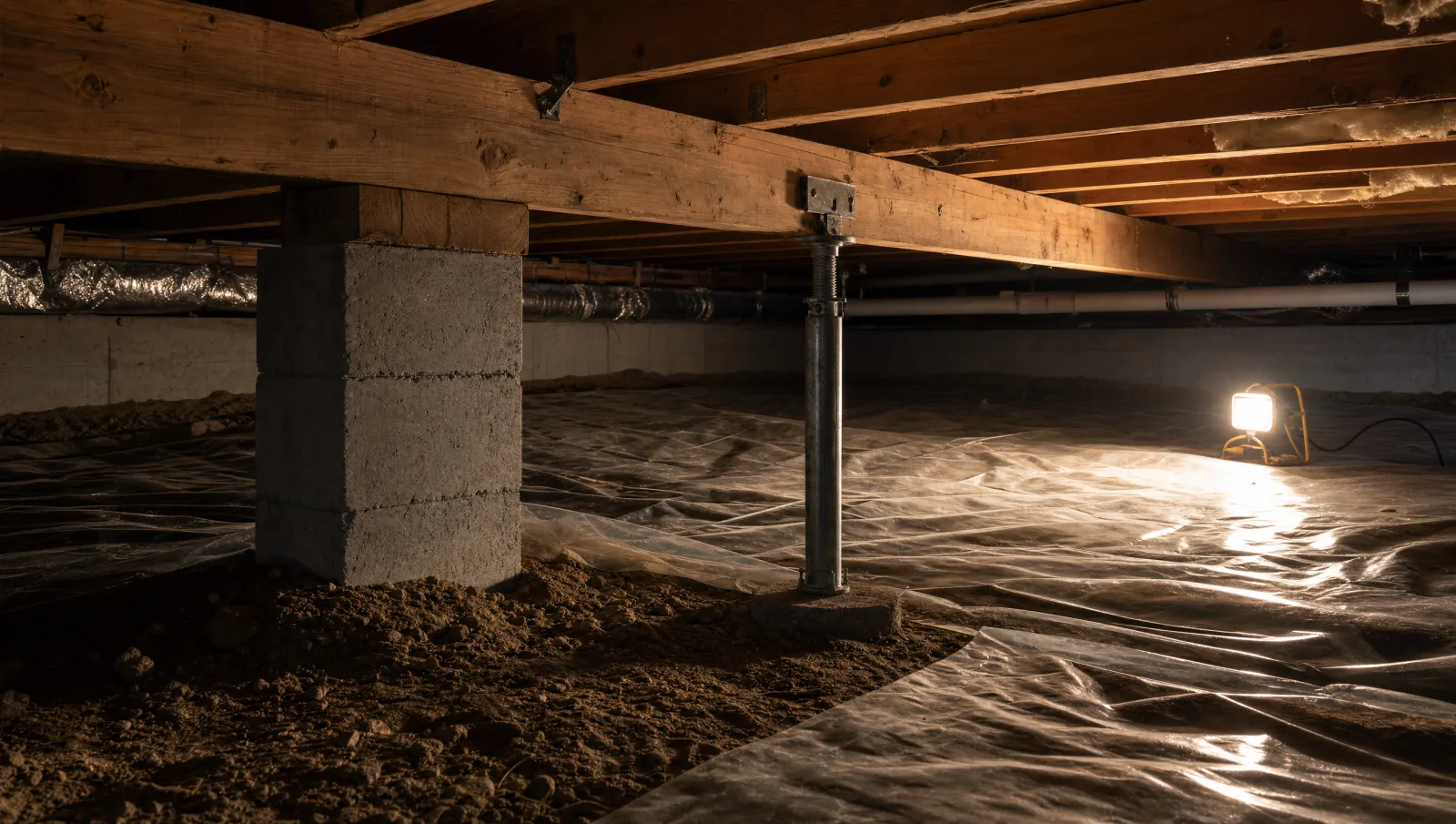
Interior view of a residential crawl space showing wood floor joists overhead, a steel adjustable jack post supporting a beam, bare soil flooring, and a plastic vapor barrier.

Signs this is a structural crawl space problem

  • A floor that feels bouncy, springy, or noticeably soft in one spotUsually points to a joist that has weakened or a support point below it that is no longer carrying its share of the load. Localized bounce, not a whole-room feeling, is the more common pattern.
  • A visible dip or slope when you set a level on the floorA measurable slope generally means a support point under that section has settled, failed, or was never adequate for the span. How far it slopes and over what distance both matter to what fixes it.
  • A support pier that looks cracked, leaning, or is no longer touching the beam above itPiers carry point loads down to the soil. A pier that has shifted, crumbled, or lost contact with the beam is no longer doing that job, and the load has to be going somewhere else in the meantime.
  • Wood framing that looks rotted, split, or has visible insect damageDamaged wood loses strength gradually, which is why it is often noticed only once a floor above it starts to move. The extent of the damage — surface versus through the member — is what an on-site look establishes.
  • Doors or windows on the main floor that have started stickingFraming movement below can telegraph upward into door and window frames. It is a secondary sign worth mentioning, not a diagnosis on its own — plenty of sticking doors have nothing to do with the crawl space.

What "structural" means in a crawl space

A crawl space carries the house on a system of beams, joists, and support piers spaced to hold the floor above without excess deflection. Crawl space repair in San Diego, in the structural sense, means restoring or reinforcing that load path — adding or replacing support piers, sistering or replacing a damaged joist, or shimming and leveling a beam that has settled out of position. That is a different job from sealing out moisture or controlling humidity, which is what crawl space encapsulation addresses. The two problems can coexist — sustained moisture is one of the things that damages wood framing in the first place — but this page assumes the question in front of you is "is something under my floor structurally failing," not "why does it smell musty down there."

How a structural crawl space problem gets assessed

  1. Map where the floor moves and by how muchMeasuring the actual slope or bounce, and where it starts and stops, narrows the problem to a specific run of joists or a specific support point rather than "the crawl space" in general.
  2. Inspect the framing and piers directly underneathA visual and physical check of the joists, beams, and piers in that section — looking for rot, cracking, insect damage, or a pier that has lost contact with the beam it was meant to support.
  3. Check whether moisture contributed to the damageWood that failed structurally is often wood that was wet for a long time first. Establishing that connection matters for the repair plan, even when the fix itself is structural rather than a moisture fix.
  4. Confirm the span and load before proposing a fixHow far a joist spans and what it carries determine whether reinforcement is enough or a section needs replacing. This is the step that separates a spot fix from something that needs a closer engineering look.

How structural crawl space problems get corrected

Additional or replacement support piers

Fits when: A beam has sagged because its existing support points are inadequate, spaced too far apart, or have failed.

Trade-off: Adds new load paths to the soil below, which is generally the most direct fix for a sagging beam — the trade-off is that it does nothing for a joist that is damaged independent of the beam under it.

Sistering a damaged joist

Fits when: A joist has partial damage — some rot or a crack — but enough sound wood remains to reinforce rather than fully replace.

Trade-off: Less invasive and faster than full replacement, and only appropriate when enough of the original member is still structurally sound to work with.

Full joist or beam replacement

Fits when: Damage runs through enough of the member that reinforcing it would not restore adequate strength.

Trade-off: More work and more access requirements, but it is the honest answer when the existing wood cannot be trusted to carry load even with reinforcement.

Leveling and shimming a settled beam

Fits when: The beam and joists are sound, but the beam itself has settled slightly out of level over time.

Trade-off: A comparatively contained fix, and only the right answer when the support system underneath is otherwise in good condition.

What a structural crawl space repair generally involves

  1. On-site inspectionA physical look at the affected area of the crawl space, including the framing, existing piers, and any visible moisture or damage.
  2. Scope and method decided against what was foundWhich repair option applies, and to which specific joists or piers, gets decided from the inspection findings — not assumed ahead of time.
  3. Access and stagingCrawl space work is almost entirely done from inside the crawl space itself, so clearing access points and staging materials or jacks is typically the first physical step.
  4. The structural work itselfInstalling piers, sistering or replacing framing, or releveling a beam — carried out at the specific points identified in the inspection.
  5. Confirming the floor above responds as expectedRe-checking level and bounce at the affected area after the work is done is the practical way to confirm the fix addressed what was measured at the start.

What moves the cost of a structural crawl space repair

How many joists or piers are actually affected

One localized soft spot and a run of joists across a whole section of the house are very different amounts of work wearing the same description.

Whether framing needs to be sistered or fully replaced

Reinforcing sound wood is a smaller job than removing and replacing a member, and the two are not interchangeable once the wood is actually inspected.

Crawl space height and access

A low, tight crawl space with limited access points slows every step of the work compared to one with reasonable clearance.

Whether moisture contributed and needs addressing too

If sustained moisture caused the damage, leaving that unaddressed risks the same failure recurring — which is a separate scope from crawl space encapsulation but often discussed alongside it.

Where this applies across San Diego County

Housing stock and foundation type vary block to block across the county, and both affect how a crawl space was framed and how it has aged — a raised foundation on older pier-and-beam construction carries load differently than a newer engineered system, so the same symptom can point to different causes depending on where the property sits.

  • San Diego
  • Chula Vista
  • El Cajon
  • La Mesa
  • National City
  • Escondido
  • Oceanside
  • Carlsbad

Where this crosses into engineering, permitting, and verifying who you hire

Most crawl space repairs — a pier, a sistered joist, a releveled beam — are routine construction work and do not require an independent engineering opinion. That changes when the damage is extensive, when a beam is carrying a load-bearing wall above it, or when the cause of the failure is not obvious from a visual inspection. In those cases, a licensed structural engineer is the appropriate person to confirm the extent of the problem and the adequacy of a proposed repair for that specific property — that determination is genuinely outside the scope of this page, and nothing here should be read as offering it.

Structural work under a house may also require a permit depending on scope and local jurisdiction; that is a question for the contractor and the local building department at the time work is scoped, not something this page can answer in general terms for every property in San Diego County.

Because this is structural work under a house, verifying who you hire is worth the extra step before anything starts. See the contractor matching disclosure page for how a request submitted through this site gets matched to a service provider, and what to confirm about that provider yourself before work begins.
Questions people ask

How is crawl space repair different from crawl space encapsulation?

Repair addresses structural problems — failed piers, sagging or damaged joists, a settled beam. Encapsulation (see crawl space encapsulation) addresses moisture, humidity, and vapor. A crawl space can need one, the other, or both; this page is scoped to the structural half.

Can I tell from upstairs whether this is a structural problem?

Bounce, a measurable slope, or sticking doors are reasonable signs to notice from inside the house, but confirming the cause means looking at the actual framing and piers in the crawl space itself.

Does a sagging floor always mean a joist is broken?

No. A failed support pier or a beam that has settled out of level can produce the same symptom as a damaged joist. That is exactly why an on-site inspection of the framing and piers, not just the floor above, is the first real step.

Will this repair need a structural engineer?

Sometimes. Routine pier, joist, or beam work generally does not, but extensive damage or a beam under a load-bearing wall is the kind of case where a licensed structural engineer should confirm the scope for that specific property. That is a call this page will not make for you.

What if there is also moisture damage down there?

It gets noted and discussed as part of the same visit, since sustained moisture is a common contributor to structural wood damage — but addressing the moisture itself is the scope of crawl space encapsulation, not this repair.

Describe what you're seeing under the house

Where the floor feels off, whether you've been able to look under the house yourself, and anything you've already noticed about the framing or piers.

Request Service